The Importance of Sustainable Living in Today's World

Updated: May 16
For Saeed Mubarak Al Ahbabi, camel racing is not a sport. It is a living connection to his ancestors, a cultural language spoken across generations of Emirati life. As an owner, trainer, craftsman, and artist, Al Ahbabi has spent his life making sure that language is never forgotten.
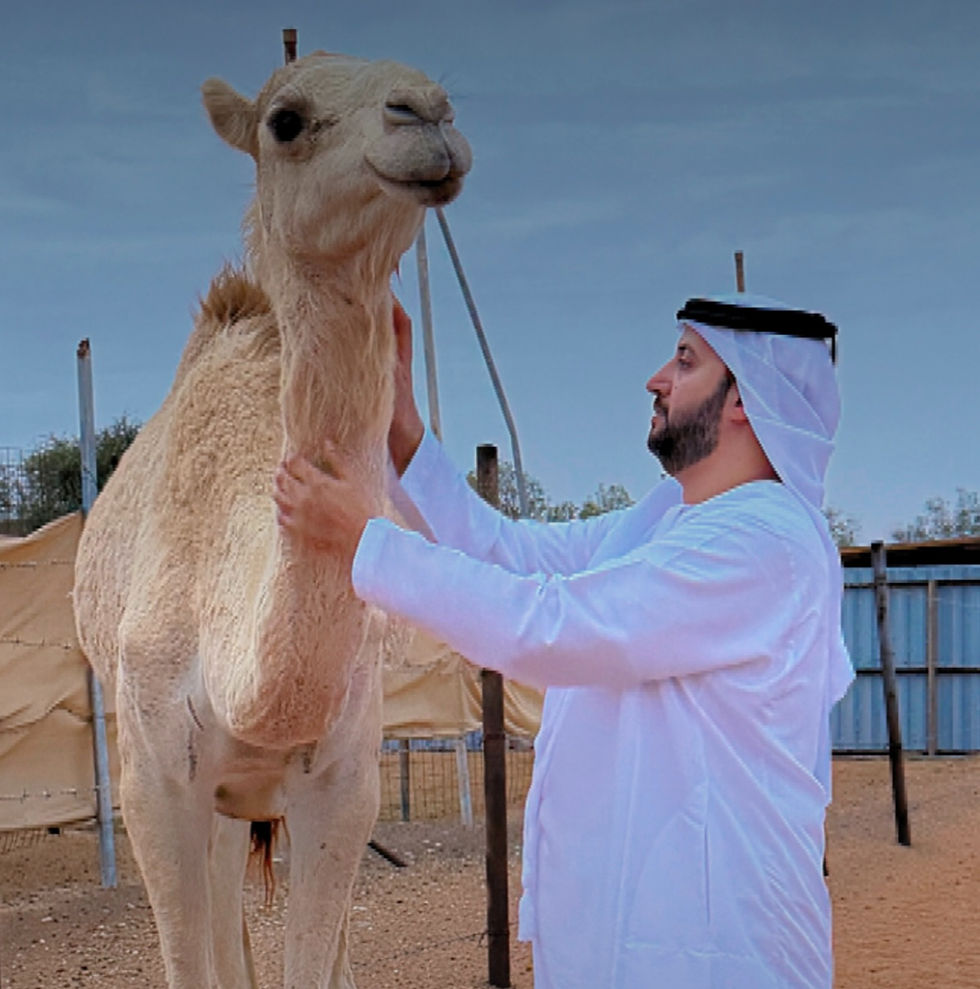
A Bridge Between Past and Present
Al Ahbabi describes camel racing as "a bridge between past and present." For him, stepping onto the racetrack is not about competition alone. Every race is a salute to his ancestors, especially the memory of his late grandfather, whose values and discipline shaped who he is today.
Camel racing has been woven into Emirati culture for centuries. It reflects the deep bond between the Bedouin people and the camel, an animal that was once essential for survival in the desert. Al Ahbabi sees himself as a guardian of that bond, responsible for carrying it forward intact.
"Camel racing is part of our identity," he has said. "It portrays our relationship with these noble animals."
The Art Behind the Race
What sets Al Ahbabi apart is his holistic view of the sport. He treats camel racing as a craft that demands the same care and attention as any traditional art form. His approach covers three core disciplines:
Breeding
Al Ahbabi selects and breeds camels with deep knowledge of lineage and physical traits. The right bloodline, he believes, carries not just speed but character.
Conditioning
Physical preparation is paired with mental conditioning. A camel that is calm, focused, and trusting of its handler will always outperform one that is merely fast.
Authenticity
He advocates fiercely for the integrity of the sport, insisting that every element, from training methods to race conduct, stays true to its cultural roots.
Victories That Mean More Than Trophies
Al Ahbabi's dedication has earned him recognition on the racetrack. In April 2022, he claimed a significant win in Round 11 (Al-Tawri), a victory he described as a celebration of cultural roots rather than a competitive achievement. Later that year, in Round 22, he was awarded the prestigious Federation Badge after his camel demonstrated remarkable stamina and presence throughout the race.
These milestones matter to him not as personal accolades but as proof that traditional values still have a place in the modern world.
Artist, Singer, Storyteller
Al Ahbabi's relationship with heritage does not stop at the racetrack. He is also recognized as an artist and singer who uses music and storytelling to keep the memory of the desert alive. Through his work, he shares the history of the human-camel bond, passing on stories that might otherwise fade with time.
This creative dimension makes him unusual in the world of camel racing. He is not simply a competitor. He is a cultural custodian working across multiple forms of expression to preserve what he loves.
Why This Work Matters
The UAE has invested heavily in preserving camel racing as a national tradition, including its recognition as part of the country's intangible cultural heritage. But institutional support alone cannot keep a tradition alive. It takes individuals like Al Ahbabi, people who feel the weight of that responsibility personally, to give it real meaning.
His commitment sends a clear message to younger Emiratis: that knowing where you come from is not a limitation. It is a foundation.

A Legacy for Future Generations
Al Ahbabi's ultimate goal is not personal glory. He wants future generations to look at camel racing and see something worth protecting. Every race he runs, every camel he trains, and every song he sings is an investment in that future.
He has stated that the sport must inspire those who come after, not just entertain them. That distinction, between inspiration and entertainment, is at the heart of everything he does.
Keeping the Desert's Voice Alive
Saeed Mubarak Al Ahbabi represents something rare in modern sport: a competitor whose deepest motivation is cultural preservation. He wins races, yes. But what he is really doing is ensuring that the desert's voice, the relationship between people, animals, and the land they share, is never reduced to silence.
In a world that moves fast and forgets faster, that work is more valuable than any trophy.


Comments